Chapter two
The Wood
So that a tree can enter a bottle.
Distilling the wood of an olive tree is not a routine gesture. Olive is not a cooperage wood: it is hard, resinous and wilful. It has to be prepared by hand, piece by piece.
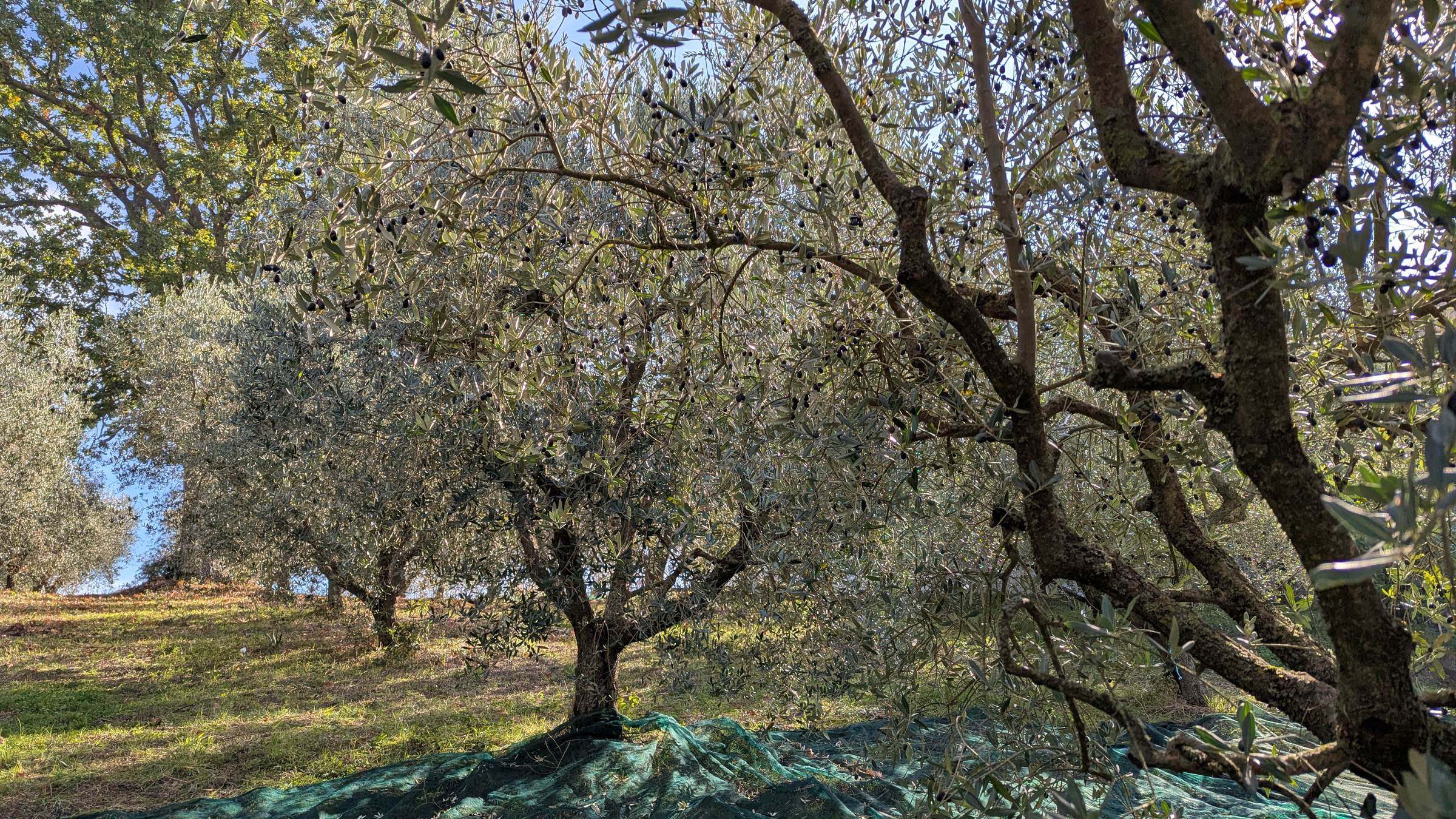
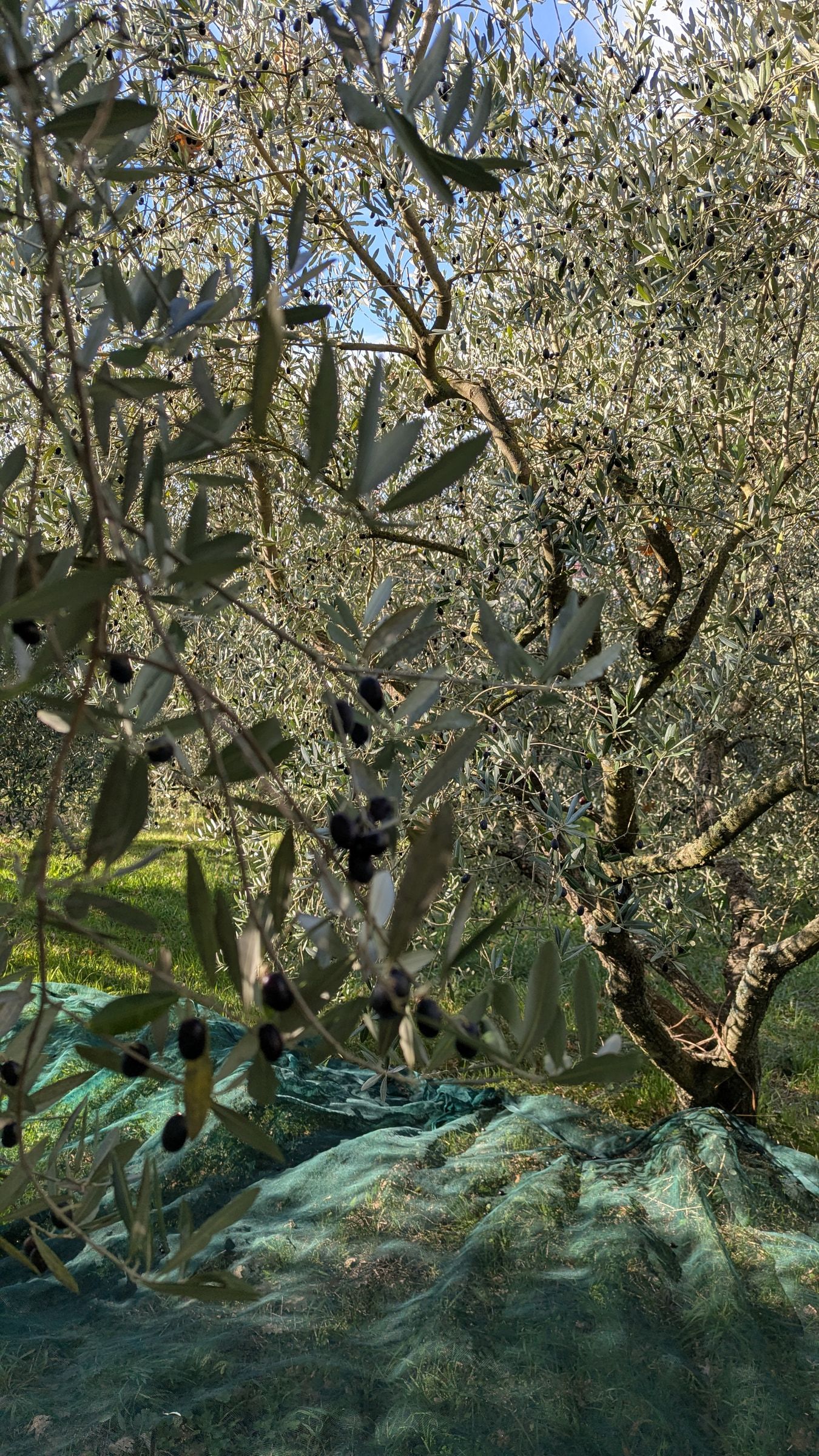
The wood used for Cuffiano 18.262 comes from the olive trees of the family grove at Cuffiano. The same trees that gave the oil and the leaves.
- 01
Hand debarking
The bark is removed by hand, without machinery, so that the wood is not contaminated by the outer parts of the tree.
- 02
Removing the vascular cambium
Beneath the bark lies the vascular cambium, the living layer of the tree. It is removed so that only mature wood remains — the part that carries aroma rather than bitterness.
- 03
Bow-saw cutting
The wood is cut with a bow saw, a thin blade that works slowly and does not scorch the fibre the way a fast blade would. The wood stays raw: it never sees heat.
The wood, step by step
-
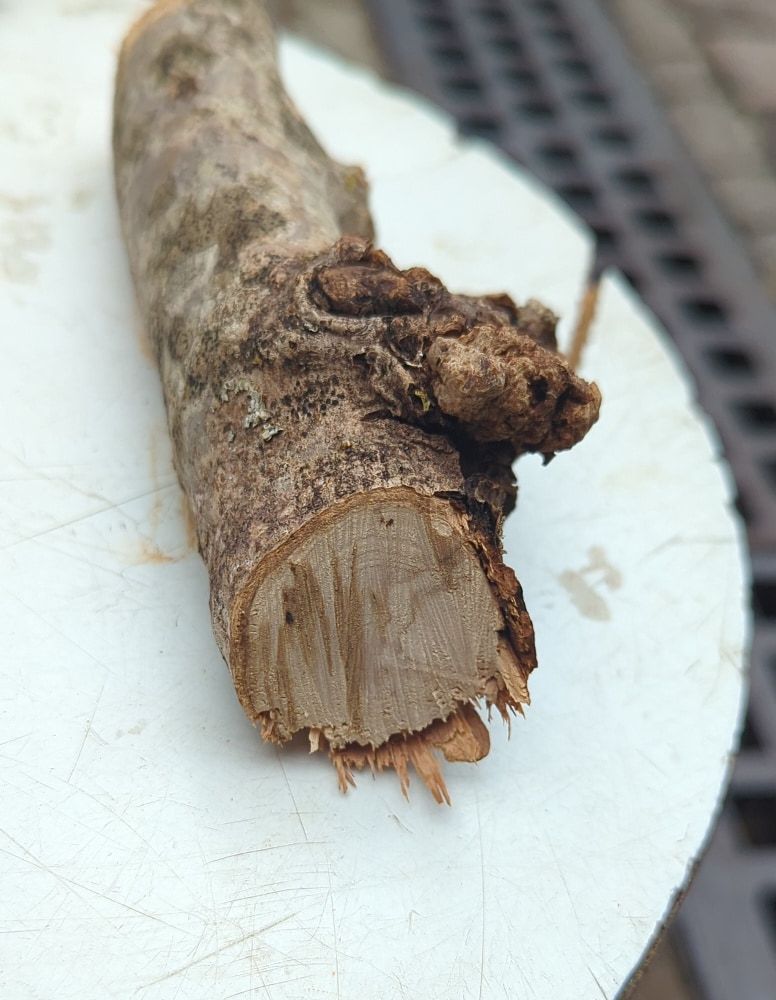
The wood as it comes from the tree, still dressed in its bark.
-
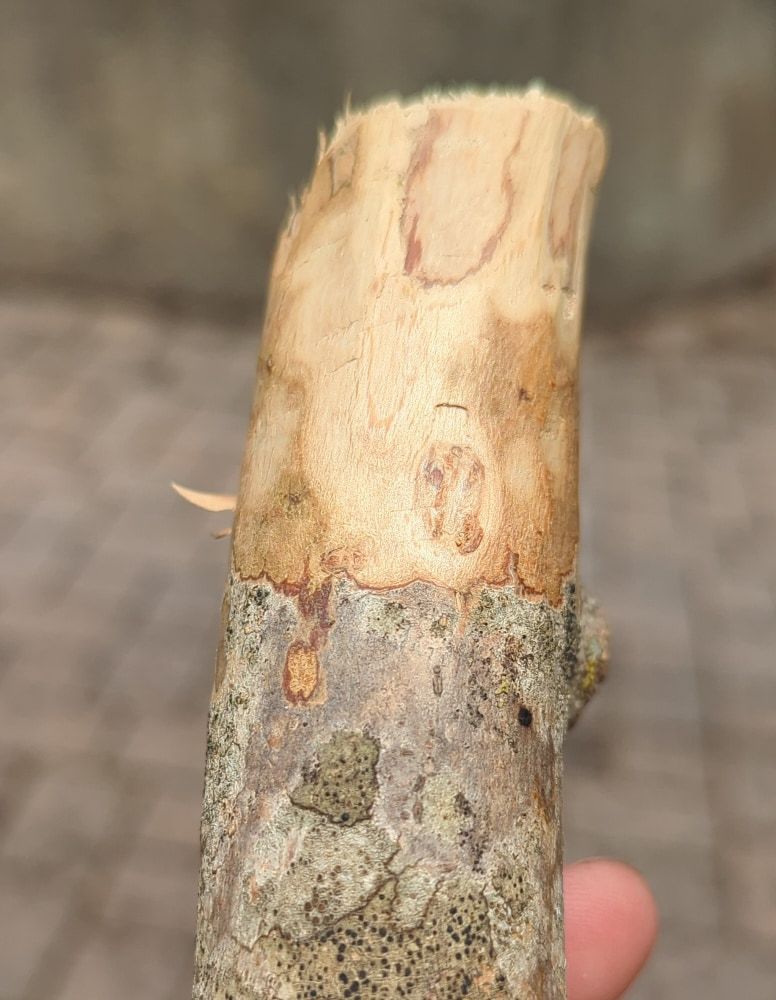
Half stripped: living wood above, bark still intact below.
-
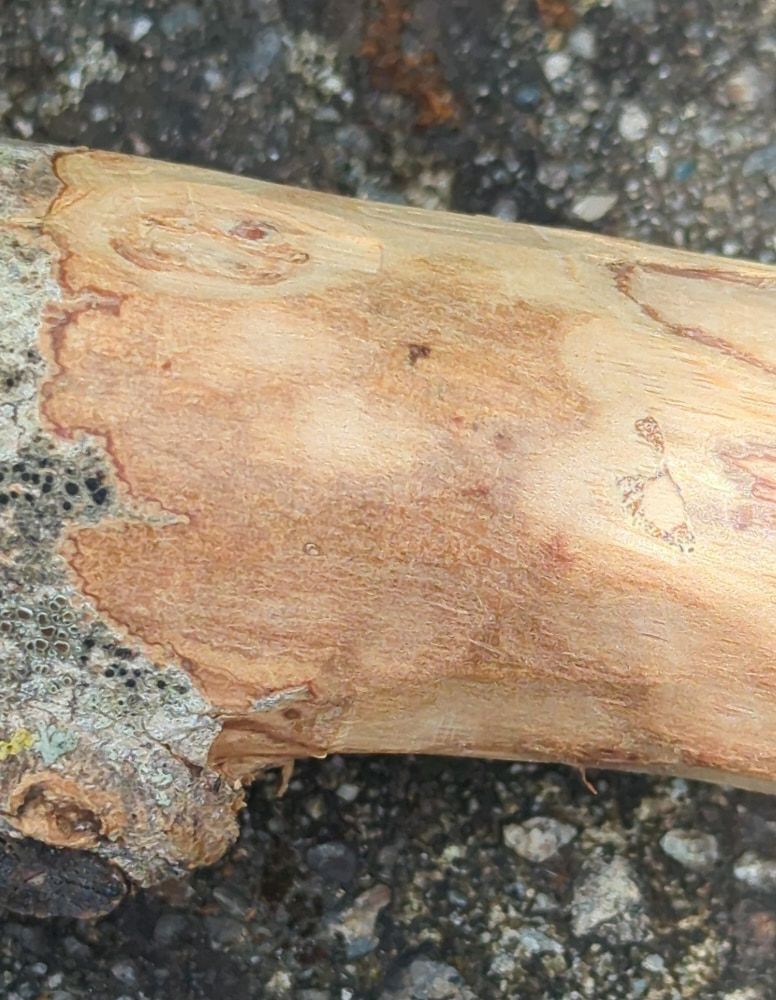
Laid bare, ready for the cut.
The result
The signature of noble wood
Prepared this way and taken into the still, olive wood brings the recognisable notes that give the gin its signature: the warm part that lingers after the juniper.
-
Wood from home
Not bought wood: wood from home, from the same trees that shade the grove.
-
Made by hand
Every step is done by hand. That is why this edition is a limited one.
The wood is the part of the project that takes the most time. It is also the part you notice most.